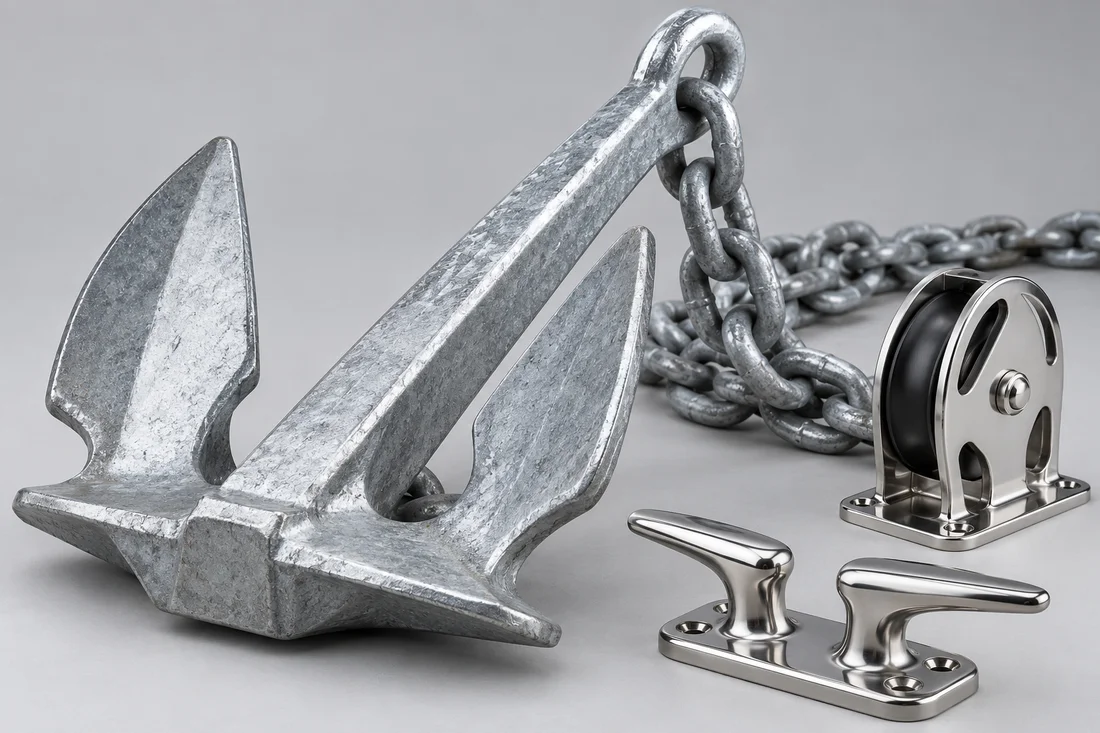

Technical guideDimension checks for shackles, hooks and master links
Bearing dimensions and clearances matter as much as a connector’s name. Two items with the same general description may fit an arrangement differently.
Read the guideSourced selection and preparation guides for rope, lifting, marine equipment and technical procurement.

Technical guideBearing dimensions and clearances matter as much as a connector’s name. Two items with the same general description may fit an arrangement differently.
Read the guide

Technical guideFibre type is a useful starting point, but not a complete product selection. Construction, coating, termination and duty profile also belong in the comparison.
Read the guide
Technical guideAn eye splice is considered with rope construction and the manufacturer’s method. “Rope with an eye” alone does not define a finished assembly.
Read the guide
Technical guideChafe protection should be assessed with contact surfaces and movement. Different sleeves do not provide identical protection in every application.
Read the guide
Technical guideA mooring line is part of a system involving vessel and shore equipment. An enquiry requires more than a single diameter on an order line.
Read the guide
Technical guideThe use of rope in both applications does not make their system requirements identical. Intended use and operational profile must be distinguished.
Read the guide
Technical guideStorage and records help maintain product identification and condition history. Items with unknown service history should not be assessed by appearance alone.
Read the guide
Technical guideHoisting or pulling equipment selection starts with application requirements. Product name and a capacity label do not fully define an installation.
Read the guide
Technical guideThese documents answer different questions. Possessing one does not mean another activity has occurred or suitability is established for every use.
Read the guide
Technical guideA maintenance list is more useful when different products and services use consistent information. Combining technical scope and delivery planning helps expose omissions early.
Read the guide
Technical guideA drawing with a clear revision can be more useful than a lengthy verbal description. Identify the item covered and which information is current.
Read the guide
Technical guideRemoval-from-service assessment depends on product type, observed condition and applicable instructions. One photograph or measurement cannot replace a complete review.
Read the guideShare a product code, equipment list or application. We can review the relevant product and service scope together.